Article by Robert Myres
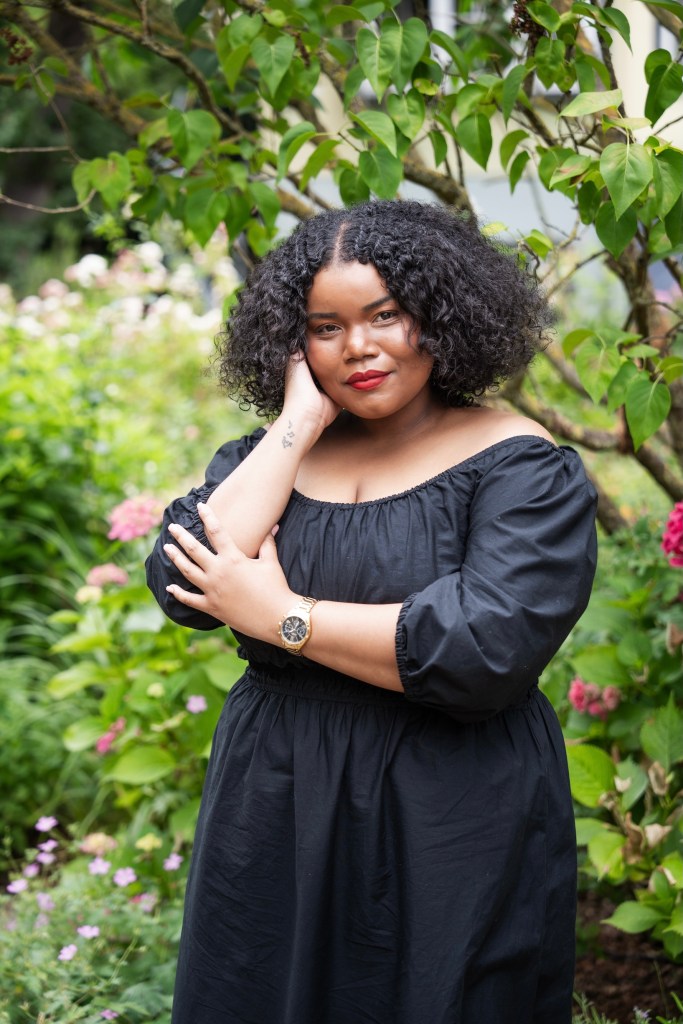
This site is dedicated to young Namibians who through perseverance & commitment find a way to break out of the trappings of a 3rd world economy and achieve amazing things. Few people embody this sentiment more than Janice.
I’ve observed Janice’s accomplishments from a distance for many years now — it was finally time for us to chat and to document her journey.
It’s a lovely story, told in her own words.

At what age did you realize you were more interested in music than others. When did you realize you wanted to be a professional musician. Where and how did you listen to music.
I think the realization was already at the beginning of high school for me, I just wasn’t consistently pursuing it other than the choir I had joined at the time. And eventually violin. Around age 12 or 13, I was seriously interested.
I realized and eventually decided I wanted to be a professional musician near the end of my matric year. Specifically, when I received some life changing news about a potential sponsor that would help me along the way — and he did.
I was blessed that everything worked out the way it did with this angelic man who offered to pay for my university studies. There were no signs clearer than this for me. So many people came together to support me in many ways, and for that I will forever be grateful.
I used to listen to music usually on my mother’s cellphone because I didn’t have one until grade 9 of high school. I could also listen sometimes at school or MYO computers. But most of the music I heard that truly influenced me was live during music Woche or other classical concerts that would occasionally take place in Swakopmund. This is what touched me most. I would then go search these pieces on the internet after hearing them and learning about these composers.
How did you discover opera and make the transition from pop music to classical. Describe your specialty in opera. What’s a typical day and week and month like for you?

It was mistakenly at first and eventually what made me sure that this is what I wanted – needed, was hearing opera singers live for the first time.
By mistakenly, I mean I had accidentally downloaded an aria from Beethoven’s only opera Fidelio. Because the only composers I knew of at the time were Beethoven, Vivaldi, Haydn and Mozart, through the simplified pieces we played on recorder and eventually violin. I downloaded this aria on my first ever phone, thinking it was some violin sonata and then someone suddenly started singing and I remember freezing while walking home because I was so stunned. That’s when I discovered a kind of singing beyond just choir singing that I was used to. I remember imitating this singer all the time after first hearing the aria. It was pretty funny, a 14-year old imitating this dramatic aria IN GERMAN!
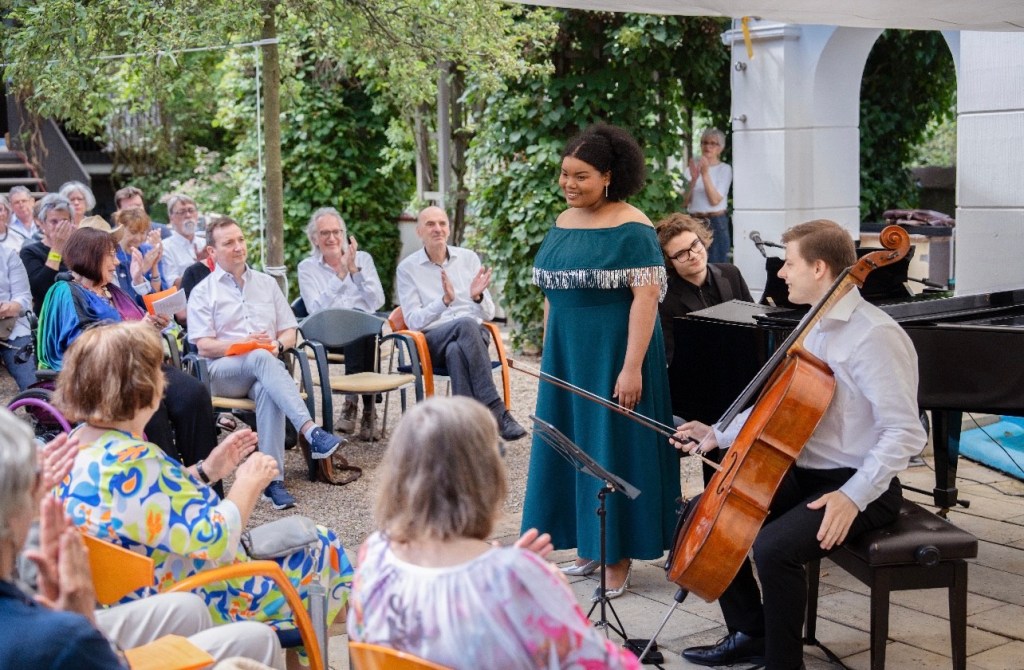
Typical weeks and months in my life are usually filled with concerts, practicing, or rehearsals for upcoming concerts or productions. This involves lots of language study as well as learning music and rhythms. I also routinely practice vocal techniques and go to coaching and lessons to focus on developing my voice.
I try to keep fit by going to the gym regularly and eating healthy because all of this helps me perform at my best — my body is my instrument after all.
To be honest, I also have several ‘lazy’ days where I just rest and try not to do too much so I can recover and avoid burnout that can easily be experienced in such high stress situations.
How did you get support for your musical training, education and career mentoring?
Like I mentioned, in one of the concerts a very important person at the beginning of my career was Mark Dawe, an angel in my life that I believe God placed in my path to make everything possible for me to have made it this far financially stress free. Mark is truly a compassionate soul who loved music and young people so much that he often invested in and hosted concerts in his lovely home. Never have I met someone so kind and generous in my life.
I also had some financial support from the arts council of Namibia for my studies in Cape Town.
In addition to financial support, it was crucial for me to have teachers and coaches that supported and nurtured me in a healthy and developmental way. I had wonderful support from my first singing teacher in Windhoek, and then throughout my studies in Cape Town with the coaches, conductor, and teachers up to and now including in Hannover where I’m completing my master’s.
These coaches, teachers, and conductors, each had a very important role to play, throughout all the hours of lessons and mentoring they offered me.
I also had a life coach and friend, who often had sessions with me for mental training, which is incredibly important for musicians (anyone really) facing moments of self-doubt, comparison, and imposters syndrome… even burnout that feels like depression. It really helps so much to have people that understand and can help you through these mental challenges in a difficult industry where it’s so easy to compare yourself and journey to others.
Where were you born and what were your early years like. Where did you live and go to school. How many siblings do you have?
I was born in Swakopmund Namibia, where I also grew up and went to school. I started at Vrede Rede primary school (and eventually MYO) and then Namib High school. I have two siblings — an older brother and a younger sister.
What was your journey between high school and your current situation. What were the biggest challenges and how did you conquer them? Did you ever feel like you may not make it to through to a professional musician.
Before I met the few people who would go on to support me, it was really difficult financially with a single mother and coming from a low-income home. I remember always having some fundraising concerts or gigs to save up this money for transport to Windhoek, where I would get my first singing lessons and also to generally just help out at home.
But beyond just financial struggles, I think one of the biggest challenges I faced were more people around me [not] believing in me. Not because they were hateful, but some were genuinely concerned that I chose music as my career path — something African households don’t perceive as stable enough for a career… or even considered a career at all.
Even my own mother had some concerns at first because to be honest, where could I work in Namibia as a musician? Her concerns were valid. But in a way, it made me feel so alone and unsupported — which resulted in me not really celebrating myself as much even if I achieved something big and meaningful. To me it just doesn’t feel worth celebrating or bragging about because I always felt that my own people back home didn’t understand the magnitude of it anyway so what’s the point? This is of course something that’s now slowly changing.
I think having more people believing in me and supporting me, even if just with encouragement, would’ve helped my self-esteem more as a young aspiring opera singer. But even with the lack of support, I somehow always knew this is what I needed to do and that in itself was motivation enough to seek it tirelessly.
I think this was also the reason that I never gave up on this dream. Because I knew in my heart that I could do it if only I was afforded the same opportunities other people (most of my current colleagues) have had when they first started. Simply things like access to music theory education, instruments, singing lessons or training from a younger age. And even though I started a bit later, I just loved it so much that I caught up quickly and excelled because to me there was nothing else more exciting than spending hours on doing than this.
Who are your musical heroes. Who do you most admire in your life?
My musical heroes are all the old school bel canto Italian technique singers from decades ago like Maria Callas, Claudia Muzio, Rosa Ponselle, Renata Tebaldi, Leontyne Price — only a few of many on my list.
Singers who when they sing not only tell you the story through their acting but their singing as well. Singers that paint such vivid pictures with how fearlessly they make use of their voices with the most seamless techniques you will ever hear. The drama and emotions that they can convey through their voices was something that made me wonder how a human voice could do that.
Those people truly inspire me to always seek my truth in a world where everything is changing
But that’s just from a musical perspective.
I also really admire my mother; she is a living example of hard work and resilience no matter what life throws at you.

Where do you live now. What is your profession and what is it like. Is it hard? Enjoyable? Do you travel a lot? Where do you live?
I currently live in Hannover Germany. I am an opera singer by profession. Currently finishing my masters.
This career is everything in one to be quite honest. I love it so much, meaning I do enjoy it, but it is so difficult that sometimes it stresses me out a little and thus not so enjoyable. I must be careful of everything that I do. The kind of repertoire I sing — is it too early for me? Do I need more time to develop into this role? If it is too early, I risk vocal damage or simply not doing it as well as I could’ve had I waited.
I must be careful about my diet because of difficulties like acid reflux that often affects singers and can impact performance. Mental challenges, fighting so many thoughts, fighting people’s opinions and expectations. While technically we are required to be skilled to perfection, we are still human with an instrument so organic that anything can affect its performance and so there is a need to be kind to ourselves. But the industry often isn’t so kind and balancing that reality is very difficult.
It’s challenging in the sense that you’re not really a finished product at the end of your studies like most professions. As opera singers, we train and keep learning continuously because like athletes, we train muscles, and if we stop then we’re out of practice. If we don’t train with proper technique, we risk vocal problems and even injuries.
Even professionals with 20+ years of experience still have coaches and teachers they check in with to help stay on track of what’s happening and how they can still develop. We need a set of external ears to help along the journey because sometimes it’s difficult to trust our own ears for a variety of reasons. So having these trusted resources is so important for every singer.
Professional singers basically live out of a suitcase because every few months they travel somewhere for an engagement. This frequent travel can have a strain on relationships with family and friends. We may not see them enough because we’re either away a lot — but even when we are with them, we need a lot of time alone to prepare and practice for upcoming performances.
Another thing about the career for women is that during that time of the month, singing is kind of a nightmare. But even then, you’re expected to perform at your best. Imagine having stabbing pains on your lower back and abdomen but need to make use of those very muscles for singing and breathing. Often during such times, the voice sounds weaker and not at its best but still you make it work somehow.
This is what I mean saying it is so many things at once that must all be managed and balanced for a successful career.
What are your next steps. What are your next ambitions and goals
Where do I start? It often feels like the more goals I achieve, the more I set and the more I raise the bar for myself.
I have short -term and long-term goals. Short term is to join some kind of ensemble here in Germany at an opera house, where I can get more working experience and repertoire roles under my belt. I like to do some more larger competitions and just put myself out there as much as possible.
Long term is to eventually return to Namibia to build our first opera house and to teach and proudly give back and create opportunities for young Namibians with the same interest — such opportunities that I never had and had to fight for or leave Namibia to find.
I believe all these things are possible, I stand firmly in my trust and faith in God to make all these things possible for me and the greater good of my country, as He has been doing continuously throughout my journey.