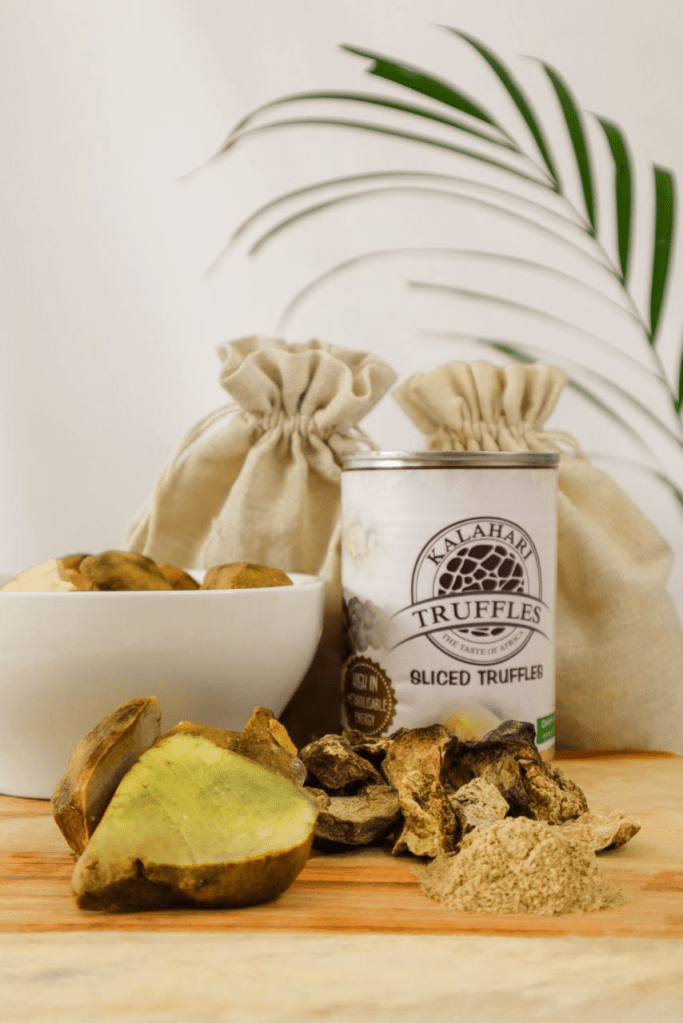
The excitement that comes with rain in Namibia is unmatched, especially in the northern parts. It’s usually when tractors and hoes are most useful because the fields are fit for ploughing. The children are always the happiest because they get to play with water when the parents aren’t looking, and some parents are even happier because ombidi is in season.
For Selma A. Biton, these rains carry a deeper significance as they bring back memories of her childhood and the traditions that shaped her entrepreneurial journey.
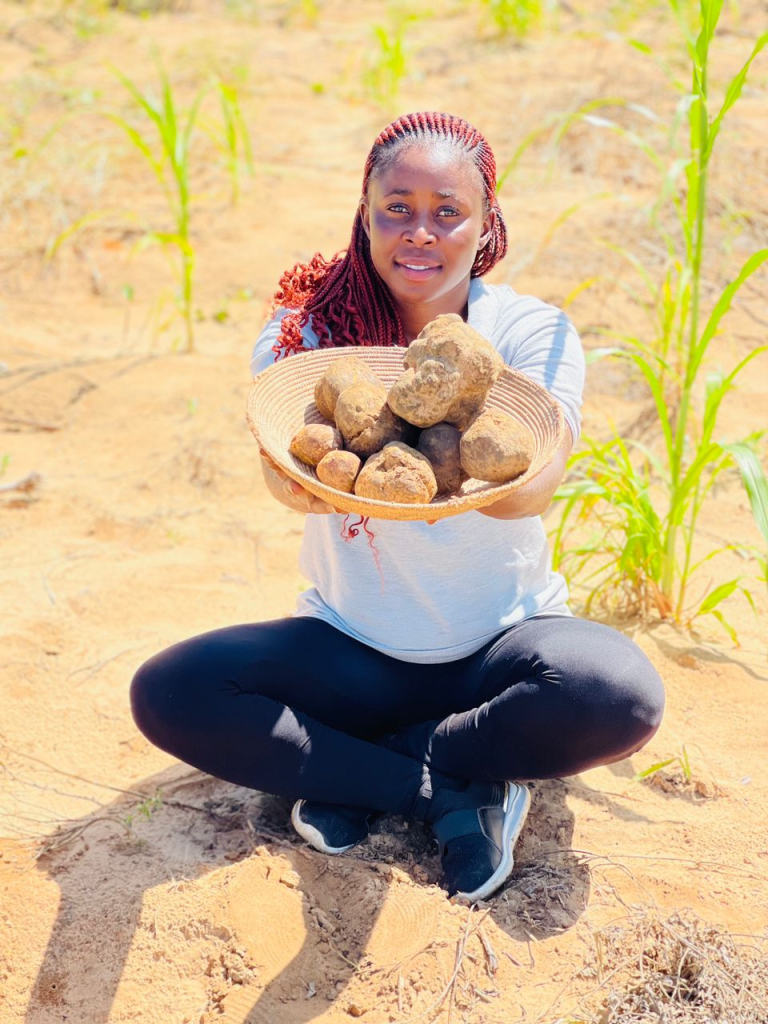
Born in 1995 in Ondobe YoMuthiya, a small village in the Oshikoto region, Selma is the youngest of eight siblings. Although she describes her upbringing as not being the best because her family constantly lived hand to mouth, she says there was never a dull moment. “With six sisters and two brothers, there was always something happening,” Selma recalls. “We made do with what we had and found joy in the simplest things.”
Her early years were spent in Arandis, where her father worked as an aviation cleaner. In 1997, her mother left for police training in Lubango, and after graduating, the family relocated to Tsumeb. Selma describes her life in Tsumeb as something that brought new experiences. When people say we were all raised in one house, they are not joking because Selma’s best memory is when she attempted to run away from home when my mom decided I had to cut my hair. (Having six daughters meant salon fees could become quite the burden!) We didn’t have much, but we were happy.
Selma has always been a persistent child, and this is evident in her decisions when she was young. When she completed grade 7 at Saint Francis, she was to attend Opawa Secondary School. Still, because she wanted to attend Etosha Secondary School, she fought with her mom, and after much persistence, she was accepted into Etosha.
Selma said that bold decision planted the seeds of independence that would later drive her entrepreneurial spirit.
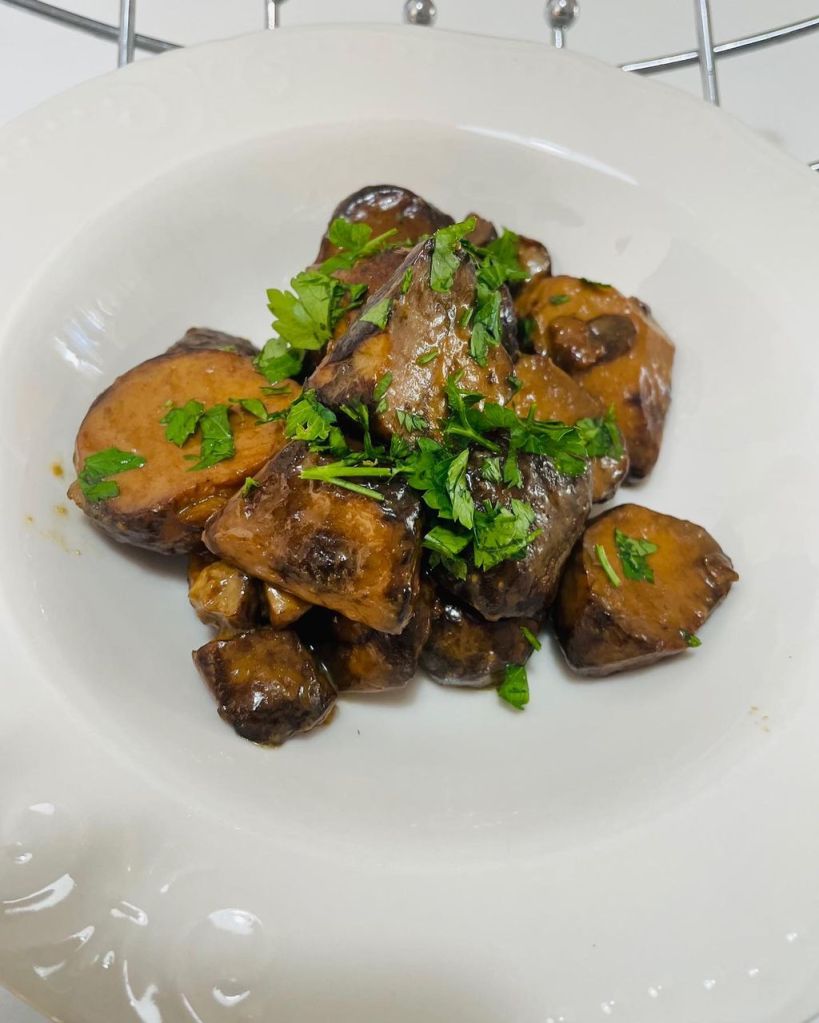
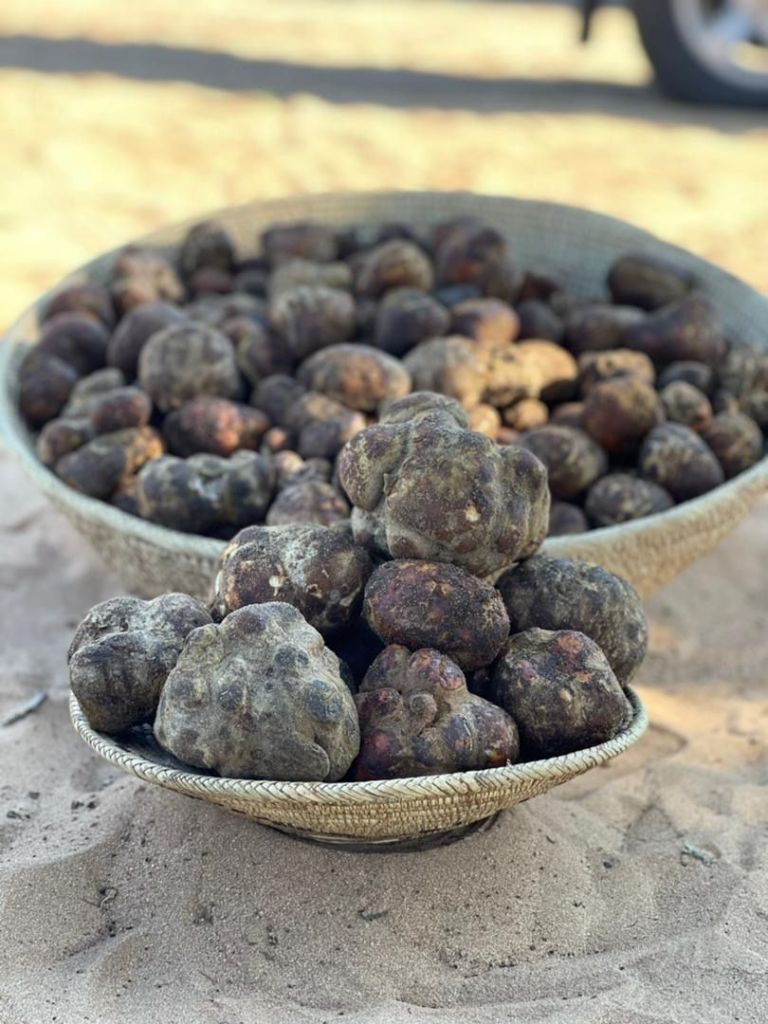
Among the many childhood memories Selma cherishes is the tradition of eating truffles, known as omatumbula in Oshiwambo. These seasonal delicacies were a staple in her household. Whenever we went north for the holidays, even though we had goats, chickens, and cattle, our parents often complained about the lack of relish. To make up for it, my parents would preserve food like wild spinach, truffles, beans—you name it. Among all these was my mother’s unwavering love for truffles.
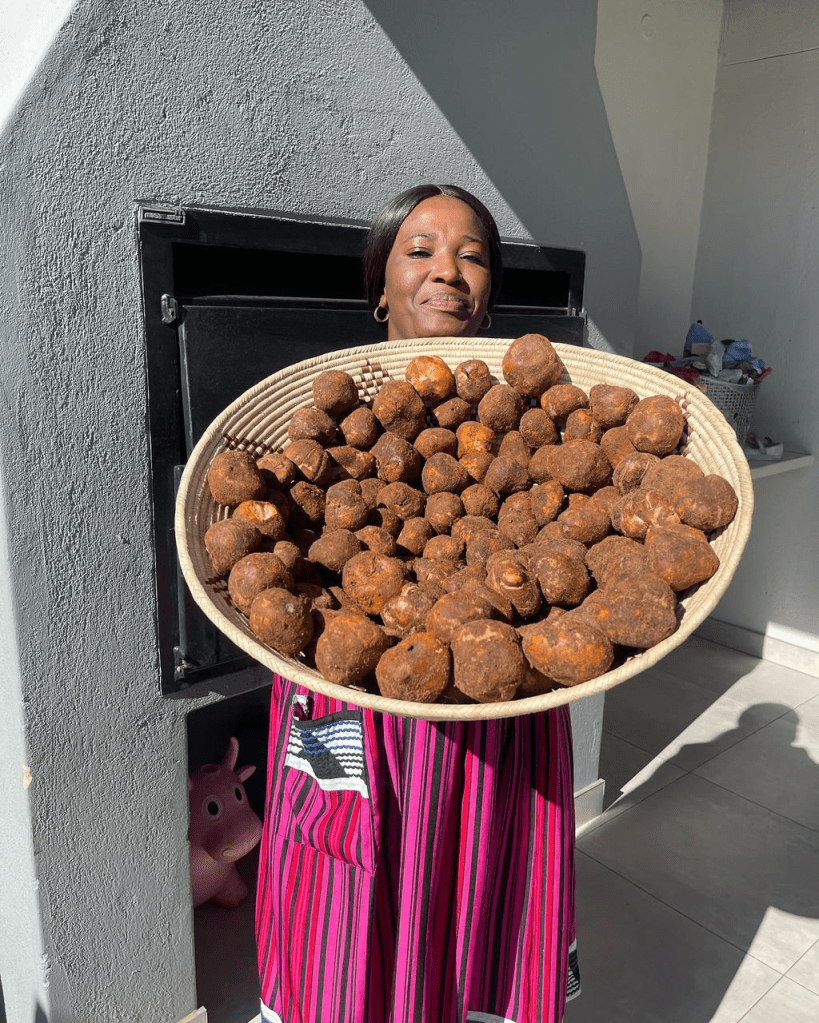
“My mother loved truffles,” Selma says with a smile. “Whether it was Christmas lunch or a regular dinner, you could count on truffles on the menu.”
Despite initially being frustrated by the monotony of truffle-based meals, Selma grew to appreciate her mother’s dedication to preserving and preparing the delicacy.
“Since truffles are seasonal, appearing only once a year, she developed creative ways to preserve them. Without a refrigerator in the village, she would dice them into pieces and dry them. Sometimes, she would pound the dried pieces into a fine powder to make a puree. I often teased her that she should have been a chef because her culinary skills were too good for a police officer.”
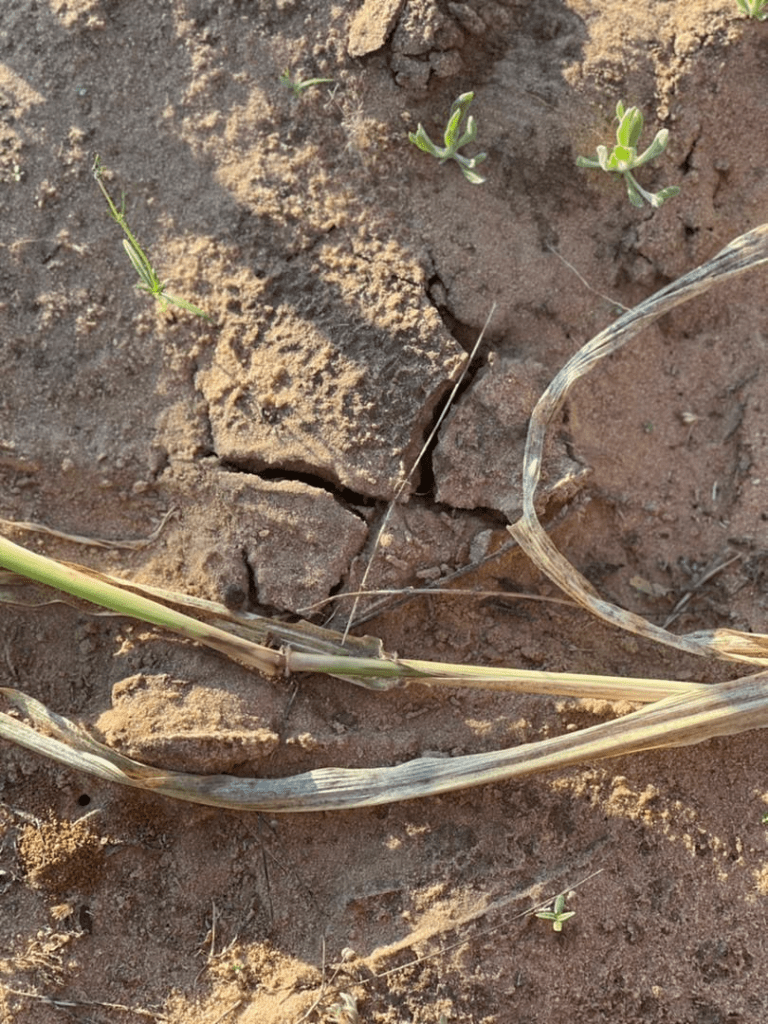
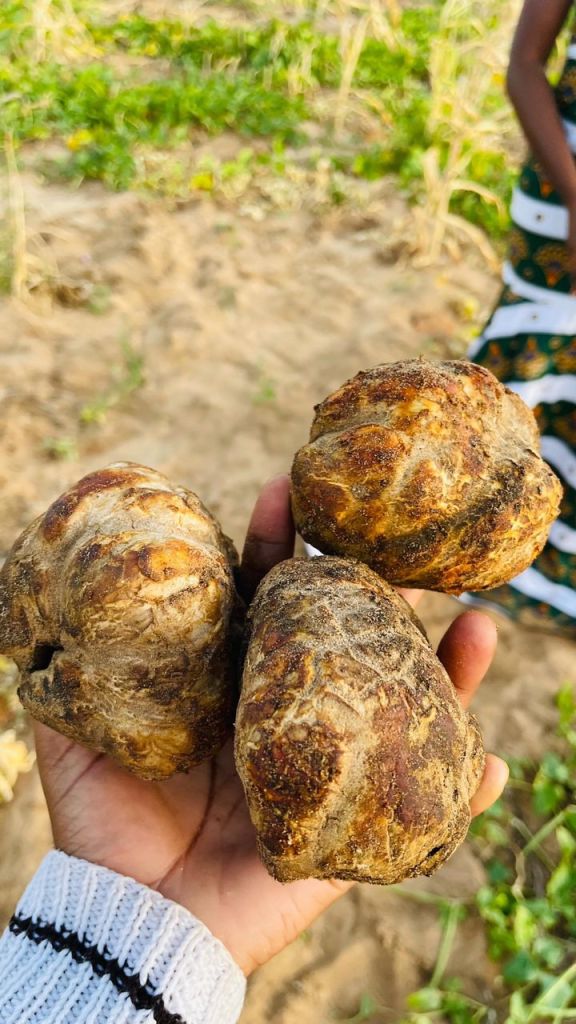
Truffles are not ordinary mushrooms. Found during the mahangu harvest season, they grow underground without seeds or roots. If you are not an expert, they are very difficult to locate because searching for cracks in the fields is the only way to find them. The preparation process is not for people who are in a rush; it requires skill. Jokingly, Selma says working with truffles demands a surgeon’s precision. They are incredibly delicate and often have small crevices with sand inside, so you must make careful incisions without damaging them.
The idea to start a business came to Selma in 2018 when her mother sent her a box of truffles to Windhoek. Her husband, an Israeli with a refined palate, was overjoyed at the sight. “He couldn’t believe we had such treasures here,” Selma recalls. “In his country, truffles are rare, and people pay a fortune for them.” His excitement sparked an idea that would eventually become Kalahari Truffles.
Though the idea took years to materialise, Selma took the time to research truffles, study their lifecycle, and refine preservation techniques. She even submitted samples to laboratories in Windhoek, and by 2022, she felt ready to turn her passion into a business. Known as Kalahari Tuber, Selma wanted to honour the product’s origin and keep the focus on its natural uniqueness; she named her business Kalahari Truffles.
Asked whether the business is lucrative, Selma says breaking into the Namibian market has proved challenging. Despite approaching local restaurants and stores, she found that connections often outweighed quality. “It’s tough here,” she admits. But internationally, the response has been amazing.” She has had opportunities to exhibit her products in Bangkok, Johannesburg, and Cape Town. It is through these spaces that Selma discovered a global audience eager to embrace Kalahari truffles.
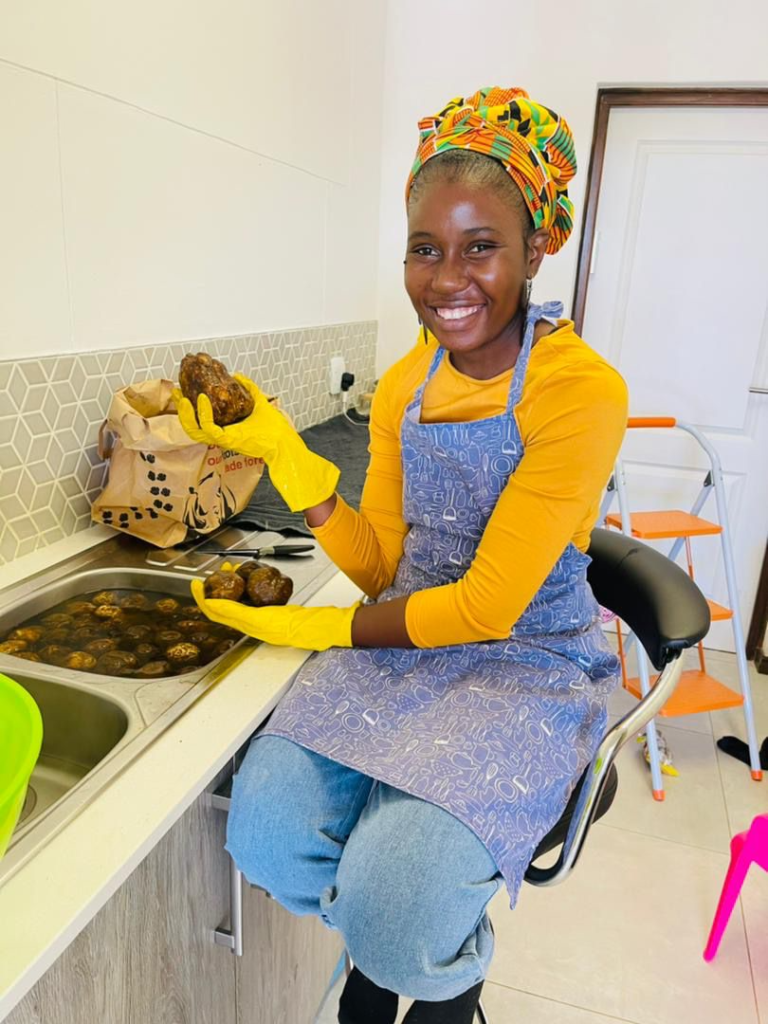
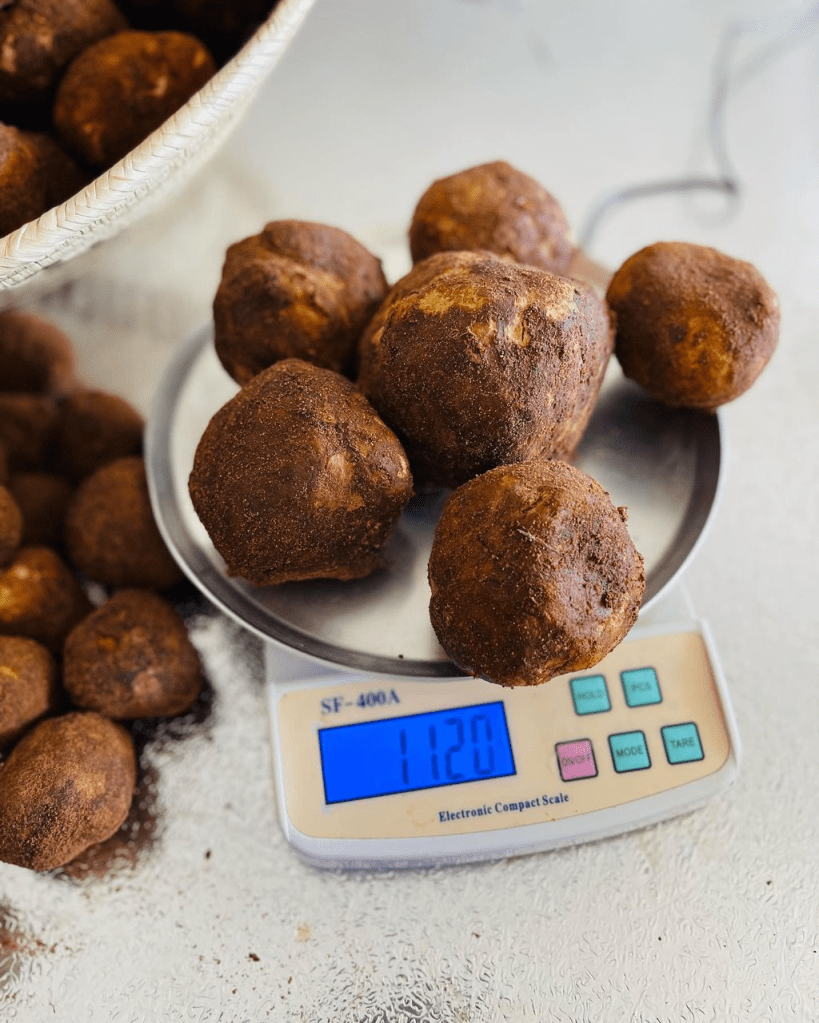
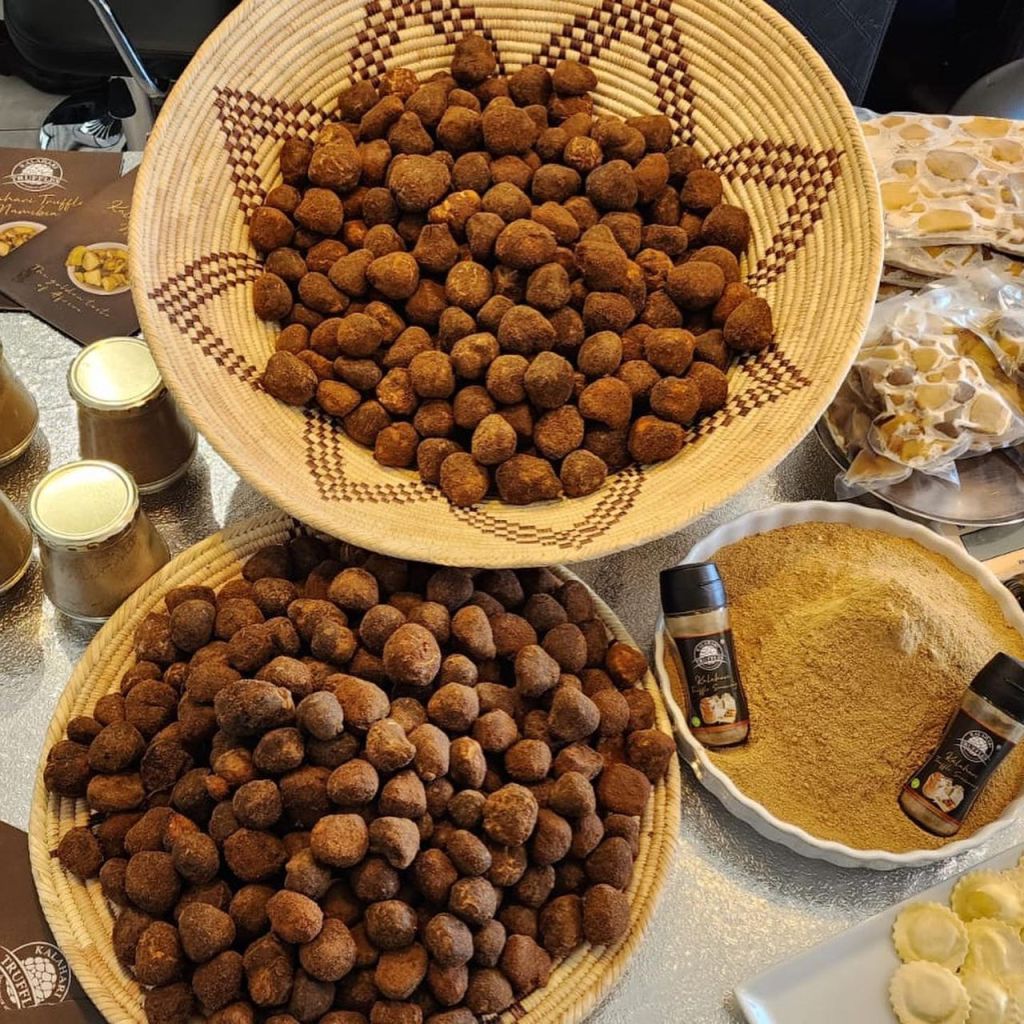
The business remains seasonal in Namibia, with truffle harvesting running from March to June. As such, Selma has developed ways to preserve them, including drying, freezing and creating truffle seasoning by pounding them into a fine powder.
“In Namibia, I’ve mostly operated from home and occasionally sold truffles out of the boot of my car near Safari Hotel. While it’s been a humble start, the passion for showcasing the potential of Kalahari truffles keeps me motivated.”
Selma is deeply involved in every aspect, from foraging to cleaning and transporting. Because I love being hands-on, I travel across the country searching for truffles, testing them and transporting them to ensure they arrive intact. However, Selma quickly realised she couldn’t do it all alone.
“Juggling everything alone proved overwhelming, and I fell behind on administrative tasks. On top of that, the financial strain of running the business alone began to take its toll.”
Recognising the need for support, she brought her husband and his business partner on board, transforming the venture into a family affair. She also hired seasonal employees to assist with the cleaning process.
Entrepreneurship, Selma says, is not for the faint-hearted. “There’s no bread for a lazy woman,” she quips, a mantra she lives by. Diversifying her income streams has been essential, especially during dry spells when truffles are scarce. From selling wigs to running a microlending business and managing Airbnb properties, Selma embodies resilience and adaptability.
Her advice to aspiring entrepreneurs is simple yet profound: just start. “Don’t let fear hold you back,” she urges. “Believe in your vision, and when one door closes, knock on another. Opportunities are out there—you must just be ready to seize them.”
For Selma, Kalahari Truffles is more than a business; it’s a testament to her mother’s legacy, a celebration of Namibian resources and a symbol of perseverance. Reflecting on her journey, she hopes her story inspires others to pursue their dreams with courage and determination. “Passion is the secret ingredient,” she says. “If you love what you do, success will follow.”
Emerging Namibia is proud to share Selma’s story, a reminder that greatness often begins with small steps and bold decisions. Whether it’s truffles from the Kalahari or dreams nurtured under the Namibian sun, Selma’s journey proves that with passion and persistence, the possibilities are endless. kalaharitruffels.com

Really well written. The writing is inspiring not to talk about turning a local delicacy into a business.
LikeLike
❤️
LikeLike
BEAUTIFUL 🤌🏾
LikeLike
I would like to know we’re to buy it.
LikeLike
This writing is so beautiful and inspiring looking forward to more articles☺️
LikeLike
Beautifully written indeed. Grateful for the feature. For those interested in our product(s), kindly reach us on Instagram @kalahari_truffles_namibia or email us on selma@kalaharitruffels.com
LikeLike